Introducing: RecruiterCloud. Blending intelligent automation with the power of human connection to revolutionize how your source & hire talent for your team. Simply outline your ideal hire, and we'll have qualified & interested candidates booked on your calendar by the next day. It’s that easy. Get started today.
In this post, we'll explore the top hiring trends of 2023 at startups.
Finding the right talent is critical for the success of startups. Fortunately, the hiring landscape is evolving rapidly especially with the growing adoption of AI recruiting. As recruiters become better equipped to automate many of the time-consuming tasks such as resume screening, interview scheduling, and initial candidate interviews, they’re also finding opportunities to free up time and focus on more strategic aspects of the recruitment process like building relationships with candidates and assessing their soft skills.
Top recruiting trends for startups of 2023
1. AI recruiting software
AI-powered recruiting tools and systems are becoming more widely adopted, with businesses of all sizes using them to automate various aspects of the recruitment process. These tools use machine learning algorithms to help with resume screening, candidate matching, and even initial interviews. By analyzing patterns in candidate data, recruiting with AI can help identify top candidates, reduce bias in the selection process, and streamline the recruiting process. As a recruiter, embracing these tools can help you save time and resources, allowing you to focus on building relationships with candidates.
2. Virtual hiring in 2023
With the rise of remote work, virtual hiring has become a popular trend in the recruitment industry. This involves conducting interviews and assessments via video conferencing applications -- such as Zoom or Google Meet – allowing recruiters to connect with candidates from anywhere in the world. Virtual hiring can save time and money, as it eliminates the need for in-person interviews and reduces travel costs. It can also help recruiters cast a wider net, reaching candidates who may not be able to travel for an interview. Incorporating AI recruiting tools with virtual hiring can save recruiters, hiring managers, and founders time to focus on building the business.
3. The rise of the gig economy at startups
Over the past few years, the gig economy experienced a significant rise, reshaping the way people work and businesses operate. Fueled by technological advancements, shifting workforce preferences, and the aftermath of the global pandemic, the gig economy has become a prominent force in the labor market. Freelancers, independent contractors, and gig workers now contribute to a substantial portion of the workforce. Companies are increasingly turning to gig workers to fill temporary and project-based roles, benefiting from flexibility, scalability, and access to specialized skills. On the other side, individuals are embracing the gig economy for its flexibility, autonomy, and the opportunity to diversify their income streams.
4. Diversity and inclusion in 2023
Diversity and inclusion have been increasingly important in the workplace in recent years, and this trend is set to continue in 2023. Employers can work to achieve this by providing training to their recruiters and interviewers on how to conduct inclusive interviews and avoid asking biased questions. Using AI during the screening process and writing of the job descriptions may also help remove biases when sourcing for candidates. By creating a diverse and inclusive workplace, organizations can benefit from a variety of perspectives and experiences, which can lead to more innovative solutions and better business outcomes.
5. Prioritizing soft skills when hiring
While technical skills remain essential in most roles, the importance of soft skills cannot be ignored. In 2023, employers increasingly recognize that a candidate's ability to communicate, collaborate, adapt and problem-solve can be just as crucial as their technical expertise. Soft skills are particularly important in fast-paced, dynamic work environments where employees must be able to work effectively in teams and with diverse stakeholders. Recruiters will need to prioritize assessing these skills in their hiring process, and employers may need to invest in training and development programs to help their staff improve these skills over time. A focus on soft skills can help foster a more positive work culture and improve employee retention rates, as employees feel more valued and supported in their roles.
6. Pay transparency during recruiting
With all the fluctuations in the job market the last few years, it seems employees are looking to know a little bit more about the job they’re applying for before the interview. Nearly 3/4 of job listings in NYC, and 2/3 of listings in California now include pay information.
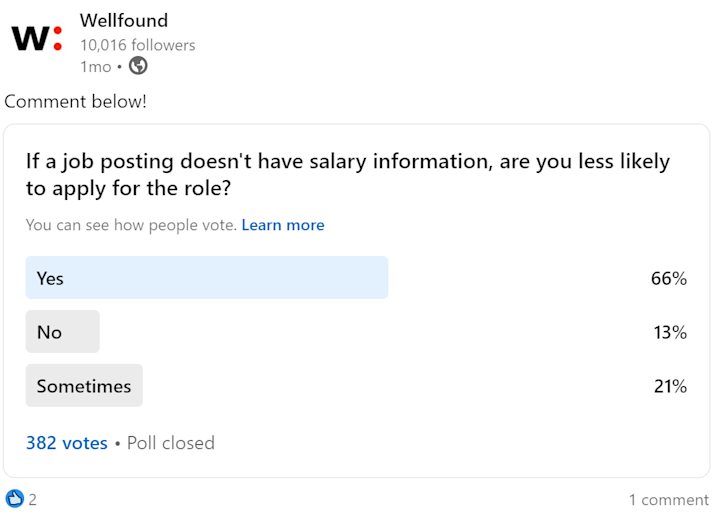
When surveying on Wellfound’s LinkedIn, 66% of respondents said if a job posting doesn’t have salary information they are less likely to apply for the role. Update your salary for your open roles on Wellfound
Other trends shaping the future of hiring
Remote work has become increasingly popular over the past few years; and as the pandemic accelerated this trend since early 2020, it's clearly here to stay. Airbnb for example is tripling down on the “work from anywhere” ethos as the company recently announced it would allow its employees to work from anywhere in the US.
Employee wellness programs are also becoming more important, as employers recognize the link between employee wellness and productivity. These programs can include everything from mental health resources to gym memberships to stress-management workshops. By offering supplemental benefits to employees, employers can not only attract top talent but also improve employee retention and engagement.
Additionally, employer branding is becoming a powerful mechanism for attracting and retaining top talent. Companies are investing in developing a strong employer brand to differentiate themselves in a crowded job market. This can include everything from showcasing startup culture on social media to highlighting employee testimonials on the company website. By building a strong employer brand, companies can attract candidates who share their values and create a more engaged and loyal workforce.
Stay up to date on the latest hiring trends 2023
As we've explored, AI recruiting trends, virtual hiring practices, and remote working among other trends are actively shaping the future of recruiting. However, keeping up with the latest recruitment trends goes beyond just adopting new technologies and tools. It's about understanding the evolving needs and expectations of candidates and employees and adapting to meet them.
Staying up to date with the latest trends is critical for businesses to stay competitive in the job market. Adopting these trends can improve your hiring process, attract top talent, and ultimately lead to better business outcomes. By leveraging the best tools, knowledge, and recruiter expertise, businesses can save time and resources by making data-driven decisions and identify the best candidates for their open positions.
Get started recruiting top talent today on Wellfound.