Our weekly tech newsletter. Subscribe today on our blog.
Your favorite startup newsletter is back, with a twist.
This week's newsletter is a special one.
We recently announced that AngelList Talent is officially spinning out from the AngelList brand and renaming to Wellfound. Our sister company AngelList Venture - the platform for investors - will continue on as now, simply, AngelList. It’s a change that enables both businesses to take the world’s startup community to new heights.
In the coming days, weeks, and months you’ll see a new look and feel, find us at a new domain, and discover new additions to what we do, starting with a revamped weekly newsletter and a new feature to help you discover the latest startup content (see more below). Learn more →
Introducing: Discover
Your one-stop to discover all things startup related.
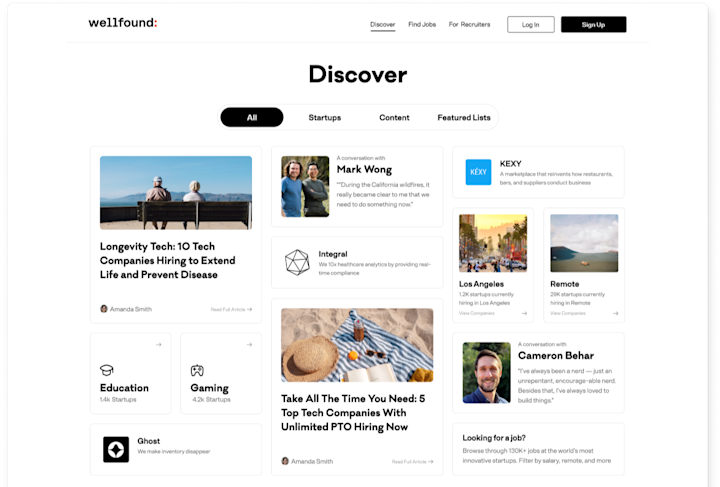
Want more startup content throughout the week? We’ve recently launched Discover, an aggregated platform that lets you browse startups, read founder stories, see past newsletters, and more. Check it out today →
From the Founders: Cameron Behar (left)
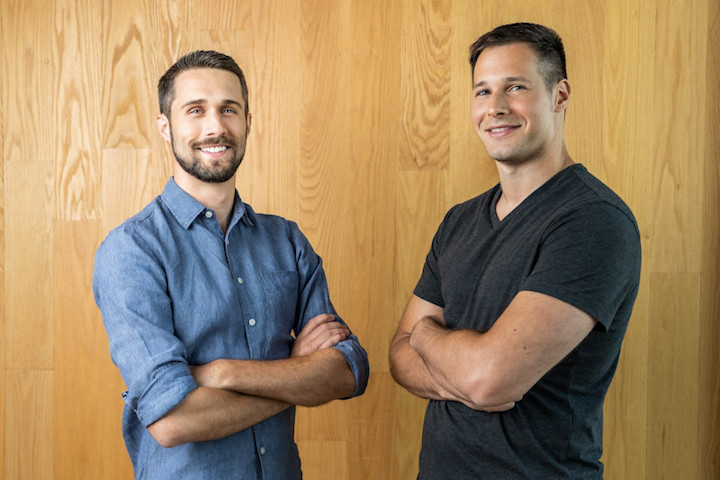
Today we’re highlighting Cameron Behar (left), CTO and Co-Founder of Sprinter Health, a startup tackling access to at-home care. We cover the story of how Sprinter Health was born out of a weekly Wednesday night idea session at the pool, advice for future founders, and Cameron’s story of growing up on a farm in Tennessee to co-founding a Series A-backed company to 50+ employees during a pandemic. Read more →
☆ Headlines
A lot of people reading this weren’t around for the 2000 dot-com bubble burst. Those who were are experiencing deja vu.
U.S. Treasury Secretary Larry Summers put it this way to an audience of tech workers: “Peloton is Pets.com.”
There’s a growing consensus that, like in 2000, the bull market of the past decade is decidedly over and a reset is underway. By some counts, 120k tech workers have been displaced so far this year, and the number rises weekly.
“It does feel a little like 2000,” one tech analyst and investor said. “Hire engineers, hire engineers, hire engineers, and then suddenly companies get a cold bucket of water in their face.”
We’re starting to get a glimpse at what that means for tech workers this time around.
After a period of talent hoarding, Big Tech is getting decidedly more Big Tech-y: Elon Musk wants his employees back in the office and on the grind; Google is changing performance reviews to ID low performers.
This could give a lot of talent the nudge they need to make a move to a smaller tech company—or maybe totally different types of “tech companies” where they can add more value. Some say now may be the last best chance to get a new job for those seeking a move.
VCs are acknowledging their role in the reset: “There is a resetting happening, which is absolutely necessary.”
Gone are the days of easy money, they say, which is good news for bootstrapped companies.
Plenty of people are seeing reason for hope. They note that the dot com crash was followed by an incredible period of growth and innovation. Lean times tend to focus companies on innovating where they can have the most impact.
And for many young tech workers who weren’t around the first time around, that’s a conversation they’re eager to have.
⌃ Trending
Step Into The Future With These 5 AI Companies
Artificial Intelligence is becoming more powerful, fast, and integrated into human lives by the day, with no signs of slowing down anytime soon.
Companies are utilizing AI to great success to increase productivity and profits, with 92% of large companies utilizing AI reporting returns on their AI investments. AI also has the power to ease the stress felt by workers by eliminating menial tasks, in turn giving them the ability to focus on more thoughtful areas of their job.
Women-Owned Companies Hiring Now
In 2021, women-founded startups in the U.S. raised $55B, representing a 146% YoY increase from 2020. However, despite this growth, funding for women founders remains at only 2% of total VC dollars. While many hurdles remain, there are breakthroughs to be celebrated. 2021 saw 4X more women-led startups reach unicorn status than 2020. This class of 83 newly minted women-led unicorns spans everything from agetech and healthcare to e-commerce and delivery.
Music Tech: 5 Top Companies Hiring Now
It’s no secret that working in the music industry can be unforgiving, often for “starving artist" wages. The digitization of music through streaming and downloads has tanked music sales, fewer people are seeing live music, and it’s harder to keep audiences' attention with nearly one song released per second on Spotify. Thankfully, the music hasn’t died out yet; artists are learning to adapt to the TikTok era of music and there are plenty of startups dedicated to overcoming the struggles of today’s digital landscape with tech based solutions.
📰 In the news
- San Francisco, Calif.-based Omneky, a provider of an AI-driven marketing platform, raised a $7M seed extension from backers including John Donovan, Orbit Ventures, and Ethos. The company’s AI analyzes designs and messaging to generate ads most likely to drive engagement.
- Irvine, Calif.-based Luckmon, a casual mobile game development startup, raised a $1.3M pre-seed round led by Chang Kim, Thor Chan, Changsu Lee, Jay Lee, K2G Tech Fund, and Primer Sazze Venture Capital Partners. Luckmon offers a reward-based mobile gaming platform focused on the play-to-earn gaming model.
- New York City, N.Y.-based Zenlytic, the provider of Enterprise-grade Business Intelligence tools for commerce, raised a $5.4M seed round led by Bain Capital Ventures. The company helps commerce brands use data to understand the drivers of their acquisitions, conversion, and retention on a platform accessible with natural language.
- Remote forward WellTheory, a provider of a solution to support individuals with autoimmune disorders, raised a $7.2M seed round led by Accel. WellTheory combines nutrition, community care, and personalized insights from health data to build a membership experience that supports women with their autoimmune journey.
- Torrance, Calif.-based Purlin, a provider of AI-powered technology products, raised an undisclosed seed round led by SUM Ventures, New Valley Ventures, RWT Horizons, Mission Gate, Fredrik Eklund, and Julia Spillman-Gover. The company builds AI-powered products for brokerages, agencies, lenders, and other companies involved in real estate transactions to expand their businesses and create an improved client experience.
🔥 Hot startups hiring now
- Sprinter Health: Reimagining last mile healthcare: in-home blood draws, vitals, and more
- Kopperfield: It's time to electrify everything
- Faliam: B2B Infrastructure for the healthcare supply chain