Today we’re highlighting Cameron Behar of Sprinter Health. We cover Cameron’s story of growing up on a farm in Tennessee, how the idea was born out of a weekly Wednesday night idea session, co-founding a Series A-backed company, and advice for future founders.
Sprinter Health bridges gaps in care for folks falling through the cracks of the modern healthcare system. Founded in January of 2021 amidst the pandemic, Sprinter Health has grown to 50+ employees after finishing their series A funding in 2021.
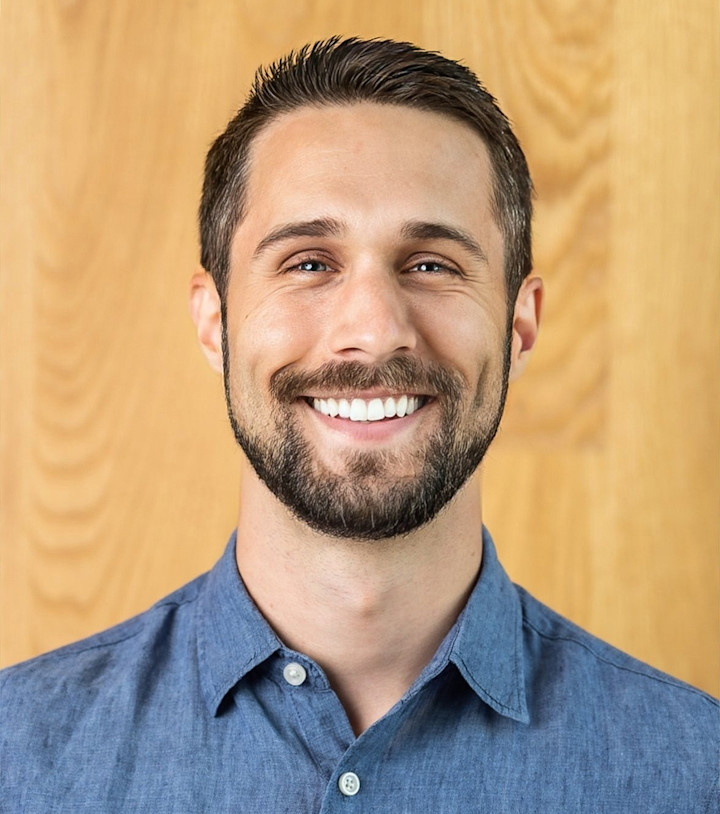
Founder Story: Cameron Behar, Co-Founder and CTO of Sprinter Health
Life before entrepreneurship
E: What was your career journey like leading up to starting Sprinter Health?
C: I was at Google for about five years and loved my time there. I was surrounded by phenomenal people working on interesting challenges and grew a tremendous amount while I was there. After Google, I moved to Oculus supporting engineering for VR growth, which then got acquired by Facebook.
E: Where did the interest in technology and engineering come from?
C: I’ve always been a nerd — just an unrepentant, incorrigible nerd. Besides that, I've always loved to build things. I grew up in a farm, in unincorporated Williamson County, an hour south of Nashville. I used to love building things with wood and sewing. We had sheep and I would make little coats for them... I guess in retrospect they already had wool coats and didn't really need me to make some for them, but you know, humble beginnings.
Code was the first thing I could build that didn't cost me anything. I write a line of code; it costs me nothing. I write another function, another module, another file. It costs me nothing but time. This was something for me that enabled me to scratch that maker itch and build whatever I wanted out of nothing and from nothing but time.
E: How old were you when you started to code then?
C: Middle school algebra. I started teaching myself on my TI-83 graphing calculator.
E: Ah, of course. A classic.
C: Yep, making games and, we’ll call them “study aids”, for my friends.
The beginning of Sprinter Health
E: What came first for you: the idea for Sprinter Health or knowing you wanted to start something on your own one day?
C: My co-founder, Max Cohen and I had spent a good year or so beforehand getting together, hanging out in his pool on summer nights every Wednesday, eating dinner made by his wonderful wife, and just talking about different ideas we had. We'd go back and forth, doing a little bit of research, talking to folks in this network.
Looking back, it was knowing that I wanted to start something and that I wanted to be a co-founder. However, if I were to make the leap to entrepreneurship, it was something that I needed to believe in.
E: How did you land on helping solve a problem in the healthcare space?
Max and I go way back. We both came from medical families and were exposed to healthcare in our first jobs. He was my first product manager during my first role at Google about 12 years ago, and we quickly became good friends. I think we were looking to do something a little bit more impactful and more directly targeting social good. That’s where healthcare came to mind. We wanted to bring value that technologists do to the healthcare space, while recognizing the value of all the great clinicians and administrators. The focus was collaborating with them and cooperating with them, rather than disrupting care.
Hyper Growth during the Pandemic
E: I saw you raised your series A about a year ago. Sounds like you’ve definitely been experiencing a lot of growth while starting your company during the pandemic.
Certainly, healthcare was top of mind for everyone around that time. Access to care was something that was a real challenge — not just because it was difficult to find treatment for some things, but because a lot of folks who were immunocompromised or elderly were really worried to go into the doctor because it represented a potentially larger health concern.
Being exposed to others, then letting their high blood pressure go untreated for just a little bit longer. That's kind of where we really focused in on access as a clear problem for our patients and thought that bringing care into the home was something that could really help bridge that. I mean this was when DoorDash was doing phenomenally during this time and we said, “why can I get a burrito delivered to my home, but I can't have my high blood pressure monitored or get my HbA1c test or these much more important, much more critical services taken care of?".
E: When you think about the space you’re in and the goal you’re tackling, what do you think your company might be uniquely bringing to the table?
Our founding team comes from a strong technological background with a focus on the consumer. We bring a certain familiarity with scaling systems with a high degree of quality to many people. On the consumer side we know what it means to build beautiful user experiences that are accessible and understandable and intuitive to people.
Besides that, I think we've been able to build an awesome team and certainly at this stage of business where we're between series A and series B, the team is so much of the value.
E: Can you tell me about some major turning points and milestones?
C: The first partner we signed — the first real partner we signed — was a special time. The company was much smaller at that point, maybe 15 people or so. That was a big one for us.
About four or five months ago when we moved into our first office from a co-working space. Having a place we can really invest in and build culture around — those moments are great.
Just speaking on memorable times in this company, it’s also a lot of the small things. Like our first Halloween together as a team. It’s those little moments that aren’t things you aren’t going to perhaps write a press release about, but are what make the startup experience what it is.
Building a team and the strategic first hire
E: Can you tell me more about the first hires you made? How did you know who you were going to hire, and what roles were you hiring for?
C: When Max and I first started we brought on a friend of ours who we had worked with at Google in that very first team. He had heard about what we were doing and just said, “Yeah, sign me up.” It was great to have someone with that level of loyalty and it continued to be a real fixture of our culture here. Not just because he was our friend, but because he was a strong carrier of positive, friendly energy.
Our next two hires were engineers both from AngelList Talent. It’s interesting how in those early days, how much a single individual can shape the culture. Ever since then everyone adds on their little bit to be this awesome mosaic.
E: The friend you brought on, did he have a specific focus or was it a jack-of-all-trades type of hire?
C: He was an engineer but ended up being a jack of all trades. I mean that was one of the great things about him. As great as he is on the engineering side, he also set up all our wifi systems, which is not an engineering role. He has done all of our compliance work up until we got a compliance manager, and being in healthcare, that’s a big deal.
I think that really embodies exactly the kind of person you want to hire at a startup. Someone who's happy to wear many hats, is in the trenches with you, and willing to take on the less flashy work because it needs to get done.
E: You talked about how at a small company, every person matters and contributes to the culture. What kind of characteristics do you look for when hiring?
C: When it comes to culture fit, what we are looking for scrappiness. A focus on what's important, and really being attentive to the inherent urgency that comes with being at a startup in contrast to a large company. We're also looking for a certain sense of humility and a willingness to do what it takes to help the company.
I'm sure our engineers would love to be spending all their time on the most complex aspects of our product or those kind of interesting computer science problems. But we also need to do the very operational work of changing this appointment status from this to this in response to the direct needs of our clinicians in the field. And what we certainly appreciate is folks who can not only be resilient to that, but can embrace that as kind of part of the journey and understand what it means to pitch in as part of a team.
Sprinter Health's future and advice to founders
E: For the part of you that was always interested in maybe starting something on your own one day, what do you think sparked that within you? Where was the drive coming from?
C: After being at big companies, as great as they are, I wanted to get back to building. Not just talking about what my team was doing, but being directly involved. I think that's the privilege of anyone working at an early-stage startup — that your fingerprints will be all over whatever you're building.
By building a startup, I certainly didn’t know what I was getting myself into. Honestly, I would imagine there are many founders who would say that they never would've founded the company had they known what they were getting themselves into beforehand.
E: Would you agree?
C: Now that I’m in it, it’s interesting. I love it. I don’t want it to stop. But yes, I think it would’ve been intimidating to start. It’s the same way that when climbing a mountain, you look up from the bottom and it’s scary and intimidating, and you know it’s hard when you’re on it, but it’s something that’s ultimately rewarding. I think I went into it with perhaps a naive optimism, and I’m glad for that. There are great times and there are hard times, but the journey has been worth it.
E: You had this quote in a previous interview where you talked about your belief that, "in time, all health companies will be home health companies". When you think about your vision for your company, how do you see it influencing the world?
C: If we're to look at it on a historical basis, healthcare was traditionally administered in the home. It wasn't until probably about the sixties where we started to see centralization of healthcare in large facilities. It made it a lot more accessible because it was more economically viable and allowed for some real development of some advanced diagnostics and machinery. What was lost in there though was obviously the access, the personal care.
It's part of our broader vision of getting care to as many folks as possible. I see us hopefully being a meaningful collaborator to all the great folks who are out there, and many of the great partners that we're already working with, to help connect patients with the care they need.
E: When you think about Sprinter Health, where do you see it in 10 years?
C: Honestly, the nature of startups is that you don't know. Do what's important to you and you let those values drive you in directions that you feel are meaningful, productive, sustainable. I would love for us to be still driving access to care. I would love for us to be commercially viable, sustainable, growing in our geographic footprint and not just covering the states we do now. I think so much of what we do is based upon the awesome work of our partners and how we can collaborate with them to figure out what this new frontier of healthcare at home looks like. The future is bright though, and I'm excited about it.
E: Now that you’re a couple years in to founding your own company, can you share any advice you’d have for future founders? Maybe for the fellow Google engineer who’s thinking of starting their own company one day?
C: Specifically for folks coming from large companies, just know that it is different. What made you successful at large companies may not be what makes you successful at a startup. And that doesn't mean you can't do it; it just means that you have to be very conscious about how you adapt to the very different circumstances of being a small company.
In general, my advice is don’t underestimate the value of people. Especially when you’re raising your seed stage, some of it’s on the idea, none of it’s on your execution. All of it’s on the people. One of the challenges that many folks face when they move to founding a startup is that many of them are individual contributors who have never managed before, and may not have experience with that, with seeing how awesome it can be to delegate and see other people succeed and build incredible things. I think it’s best summed up with a phrase I learned recently: if you want to go fast, go alone. If you want to go far, go together.
Enjoyed our Founder Story? Share this story on Twitter and LinkedIn.
Are you a founder and want to be featured? Contact [email protected] for more information.
Find what's next: www.wellfound.com.