
Is it time for a change? Changing careers is more common than you think: A third of Americans ages 25 to 44 have completely pivoted their career field since their first job out of college.
More and more people are resigning following the Great Resignation last year—now deemed the Great Reshuffle since employees aren’t just quitting, they're finding more fulfilling roles. In fact, 72% of tech employees are considering a job change. Wondering how to change careers? We’ve created a guide to demystify the process and help you find your next dream job.
The top reasons people make a career shift
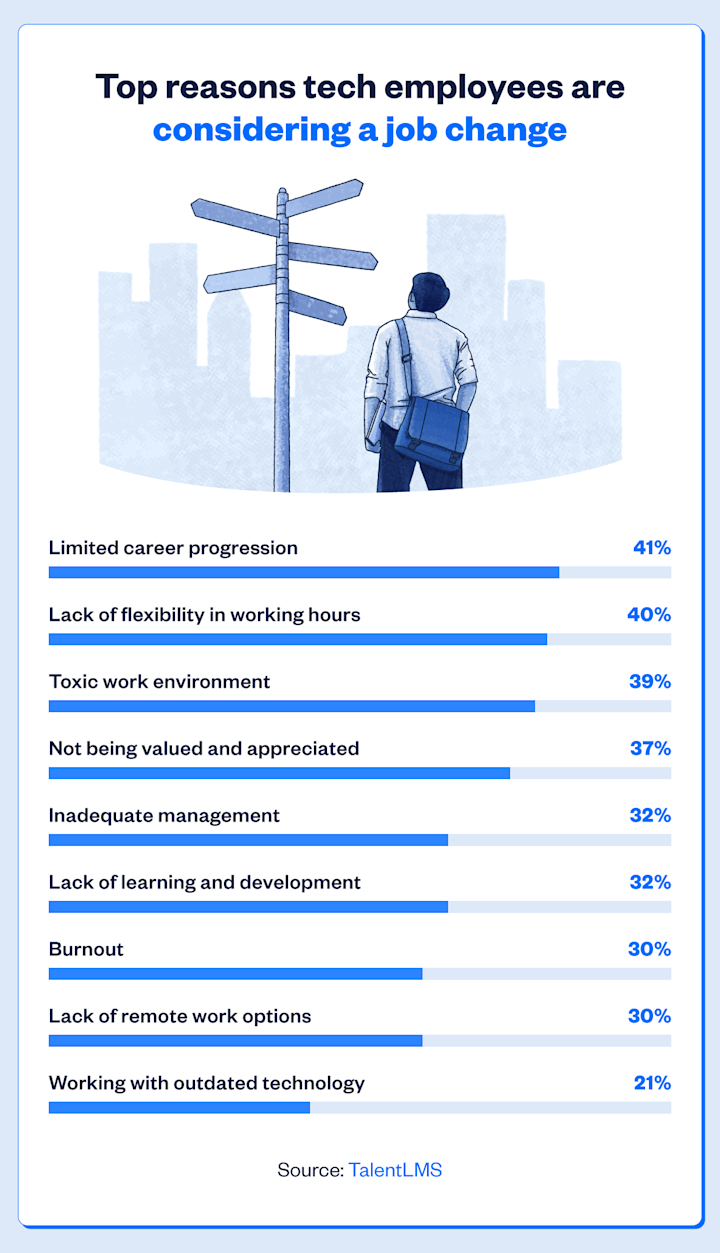
The first step to making a career change is figuring out your “why.” Ask yourself: What is motivating you to make a career change? It could be one or more of the following:
- Lack of flexibility in your current position
- Lack of opportunity for growth
- Limited career progression
- Burnout from job-related stress
- Toxic work environment
- Feeling undervalued or unappreciated
- Seeking a higher salary
No matter the case, it’s important to home in on your reason for changing careers as this will help you focus your efforts on what you really want out of your next opportunity.
How to effectively switch careers: 10 steps
Once you’ve found your “why,” you’re ready to begin taking the steps toward your career change. We’ve outlined 10 steps to take to effectively switch jobs to help you weigh your career options and make the best decision.
1. Examine your current position
Considering your work experience can help you uncover not only what wasn't satisfactory about your current job, but also what you would like to see in your next one to improve your overall work life.
Pro tip: Make a list of pros and cons of your current job to figure out what you want in your next role. For example, if your present job doesn’t allow for remote work, but this is something that is important to you, you may look for a new opportunity that allows for remote work flexibility.
2. Assess your skill set
Identifying your strengths can help reveal how you can pivot your skills to your new field of interest. Got a knack for web development? Those strengths can be used in a user experience role since you know what makes a site work efficiently.
Pro tip: Do some research of your own to determine related careers where you can transfer your skills. You can also read first-hand accounts on Reddit forums or LinkedIn articles discussing career switches to inspire your own.
3. Brainstorm different career paths
Break out a pen and paper to brainstorm some ideas for where you want your career to go. Career maps are written plans that help outline your current and future career goals. It takes into account where you are now and helps you figure out what your next steps will be, whether it’s enrolling in an online course or getting a certification. Making a career map can actually help you figure out where your current skills can be applied.
Pro tip: There are many existing career maps online for different industries, like IT or project management. Depending on your field, chances are you can find an example career roadmap.
4. Investigate alternative job opportunities
Once you’ve created your roadmap and brainstormed some different career paths, you can start looking for open positions on relevant job boards like AngelList.
If you’re not quite sure where to focus your efforts, it might be worth reaching out to a career coach or conducting some informational interviews with people who are where you want to be. Family and friends can also offer advice as to where they think your strengths can be utilized.
Pro tip: Reading job descriptions can help you learn what is expected for different roles in addition to highlighting the skills you already possess.
For example, making the shift from a technical software engineering job to a marketing position can be a huge change. Reading about what marketers are required to do and even taking an online course based on what you learn can help you get the job you want even if you don’t have experience in that particular field.
5. Create an actionable plan
Much like your roadmap, it helps to have a visual representation of where you want to go in your career. Creating a thoughtful action plan for how you’re going to make your career change can help you plan the steps you need to take to get there.
Pro tip: Crafting a proposed timeline with S.M.A.R.T. goals will be the most useful in carrying out your career change. If you start applying now, you could get interviews in a few weeks and offer letters not long after that.
6. Revise your resume
Revamping your resume for future jobs is a great tactic to attract potential employers. Be sure to list all the skills relevant to the career you want as well as any relevant experience you may have.
Pro tip: Resume tailoring is a great way to personalize your resume for each position you apply for. Since the first eyes seeing your resume will probably be an AI system, be sure to include keywords from the job description you’re applying for in your tailored resume.
7. Reach out to your professional network
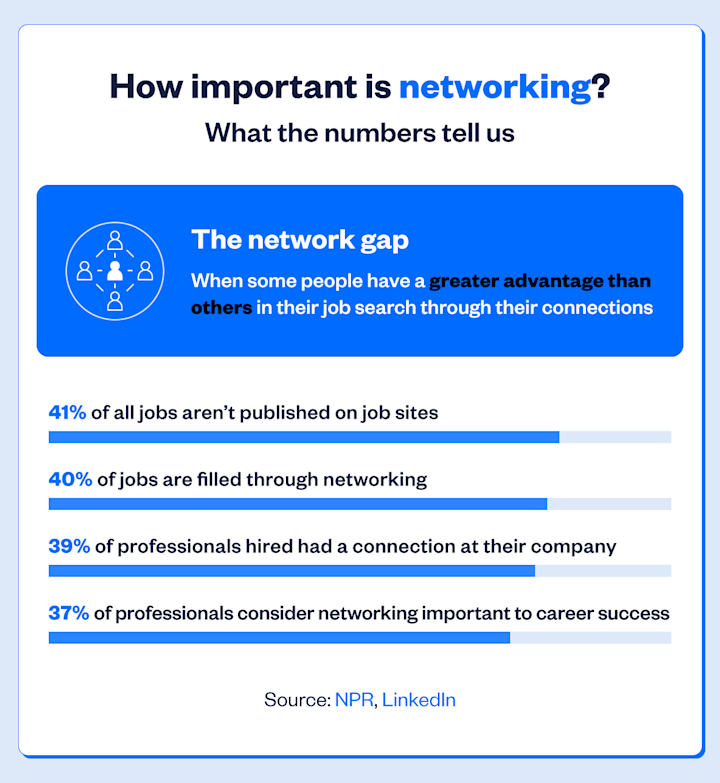
Networking can be more beneficial than we think. A survey from LinkedIn revealed that 85% of all jobs were filled by networking. Connections in your professional network can help you get a referral and even an interview at a company you’re interested in.
Pro tip: Social media is an excellent way to connect with potential employers or previous ones, who can write you a recommendation or even refer you.
8. Contact industry insiders
Finding other professionals who are where you want to be or have a career path you’re interested in pursuing are the best people to speak with. Conduct an informational interview with an industry insider to see how they got to where they are now and what you can do to advance your career in that field.
Pro tip: Many job postings can have the recruiter or hiring manager’s email address or a LinkedIn profile you can send a message to. You can reiterate your interest by asking them about the role and any tips for the interview process.
9. Prepare your exit strategy
Like any job change, you’ll want to notify your employer two weeks in advance of your last day of work. Crafting a professional resignation letter will help you build bridges and have good relationships with previous employers in the future. However, wait until you’ve finalized your decision to submit your resignation to make sure there isn’t any confusion.
Pro tip: When you’re a valuable asset to the company, your employer may give you a counteroffer to get you to stay in your current role. It’s advised to prepare a response to the potential counteroffer and ultimately make the best decision for you.
10. Keep a record of your progress
Job seekers can keep track of the jobs they’ve applied to and where they receive responses from in an Excel or Google Sheet. This can help you stay organized in your job search process and remember which positions you applied for, especially if you’re applying for a large number of jobs.
Pro tip: Online job boards like Wellfound let you save jobs that you have your eye on. This can help you keep track of where you have applied or help you create a list of the positions that interest you.
Benefits of changing careers
While changing careers can be a daunting endeavor, a new position can offer enormous benefits that will leave you grateful you chased the opportunity. Below are some benefits of changing careers that may motivate you to start your job search.
Possibility for higher pay
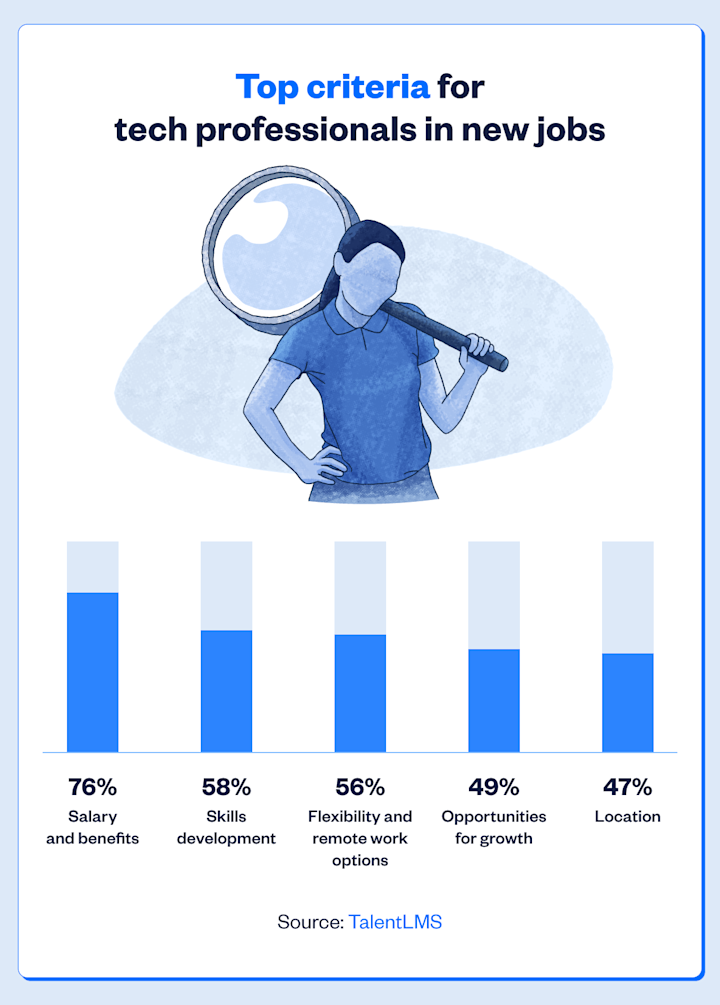
Tech professionals are on the job hunt, but over two-thirds of those surveyed reported that their top criteria in selecting a company to work for are salary and benefits. Depending on the field, switching to a different career might even be more profitable.
Employees in tech are in luck: They can earn between 20-85% more than the average salary of their state. No matter what path you choose next, make sure you’re getting compensated accordingly.
Higher rate of job satisfaction
Job satisfaction benefits everyone — especially employees. When your job is fulfilling, you’re less likely to change jobs and you can even be more productive. If your current job isn’t hitting the mark, it might be time for a change.
Opportunity to learn new skills
32% of tech professionals said that one of the reasons that they were considering a job change was lack of learning and development at their current company. On the other hand, 21% responded that their job change was motivated by working with outdated technology. A new career could mean better working conditions and opportunities for learning new competencies that inform your career path.
Career change resources to help you make the switch
While 52% of American employees are considering a career change, 44% are planning to make it happen. You can take actionable steps to start applying and interviewing for new job opportunities to help you land your dream job. Below are some career guides for job seekers looking for their big break.
While most employees will work for an employer for an average 4.1 years, that doesn’t mean you have to. Considering a career change is the first of many small steps to prioritizing your future and honoring your passion. Check out our career map worksheet and exercise below to start brainstorming your next move.
New opportunities are on the horizon. Find unique jobs at startups and tech companies on Wellfound that you can’t find anywhere else.

