Our weekly tech newsletter. Subscribe today on our blog.
We're making the move

We are excited to announce that we have a new home on the web! In the next few days, we will be officially moving from Angel.co to our new domain Wellfound.com.
This reflects our new identity as Wellfound, the best place for startups and talent to connect.
Don’t worry, you don’t need to do anything. All your bookmarks and links will automatically redirect you to the new domain.
We hope you enjoy our new look and feel, along with some exciting new features.
Thank you for being part of our community!
Thawing of IPO freeze?
There’s lots speculation and cautious optimism among founders about which startup will help break through the IPO freeze. Only 14 VC-backed firms have done IPOs this year, the lowest number since 2009. Many more are being acquired.
Among those mentioned as the most likely contenders to get CNBC pundits talking tech IPOs are San Francisco-based juggernauts Instacart and Databricks (which is leaning heavy into ML) and Minnesota-based cybersecurity startup Artic Wolf. Others are whispering things about fintechs like Stripe and Plaid.
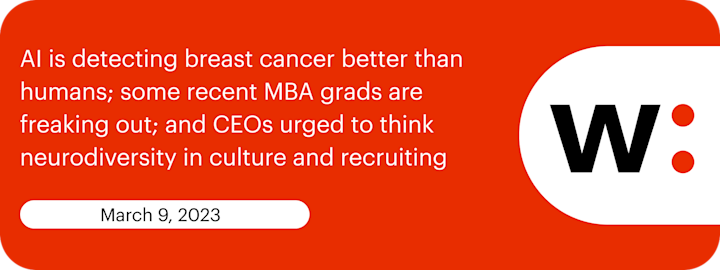
AI detects breast cancer better than humans
A group of clinics in Hungary report that since 2021 they’ve used AI to catch 22 cancer cases that were missed by radiologists, with 40 other cases under review. That’s among over 70k screenings done since the pilot launched. The project highlights the potential of AI to help with medical screenings, at a time when many companies struggle to get approval from U.S. regulators.
“I’m dreaming about the day when women are going to a breast cancer center and they are asking, ‘Do you have A.I. or not?’” one doctor told the New York Times.
Why foreign grads are freaking out
Tech industry contraction is causing near-childbirth-level pain for some recent grads. International students on special visas are scrambling to find positions to stay in the U.S. Others are expanding their job hunt to consider companies they might not have targeted in the past.
“You need to look at adjacencies. For example, there is a lot of tech at nontech companies,” a Kellogg dean advised.
According to new Bloomberg data, the global tech industry shed 137k jobs since October. Amazon cut 18k, Alphabet axed 12k, and Microsoft trimmed 10k positions.
Salesforce CEO uses ‘R’ word
Tech companies need to adapt to a “new normal” and brace for the worst, Salesforce CEO Marc Benioff told a podcaster.
“The key is that this is not my first recession,” Benioff said. “I went through it in 2001 and 2002. … We went through 2008 and 2009. … And here we are today.”
He also called ChatGPT the “ultimate plagiarizer”—a days before his company announced a deal with OpenAI.
Ex-Google AI researchers seek best revenge (startup success)
A pair of former Google researchers is dusting up drama about the company’s lethargic attitude toward generative AI tools ChatGPT. The researchers say they fought AI chatbot building but got rebuffed; so they left and started their own company.
Developed by Elon Musk’s OpenAI, ChatGPT piggybacked on Google’s early AI advances and then integrated into one of Google’s biggest rivals: Microsoft’s Bing.
The Weekly Pulse
CEOs, think diversity
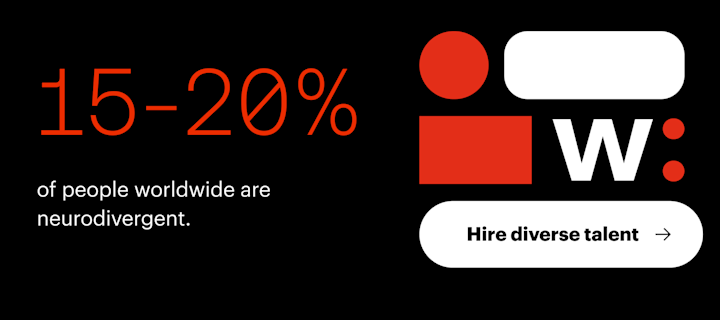
As tech leaders look for ways to engage star talent and create a magnetic environment for unicorns on the job hunt, it’s a good time to think about neurodiversity, say HR experts.
About 15% to 20% people worldwide are neurodivergent, an umbrella for variations in mental functions like dyslexia, ADHD, autism, and more. For today’s tech leaders, this presents an opportunity to redesign work processes to be accessible and create psychologically safe spaces where everyone can thrive.
Dive Deeper
- Instacart, Databricks, Arm Could Lead the IPO Market Out of Its Freeze (The Information)
- Using A.I. to Detect Breast Cancer That Doctors Miss (New York Times)
- Tech Layoffs Are Bad News for MBA Grads Seeking Jobs (Bloomberg)
- Salesforce CEO Marc Benioff says nobody saw the market downturn after the ‘best year tech ever had’— but now he’s bracing for a recession (Fortune)
- How Google Became Cautious of AI and Gave Microsoft an Opening (Wall Street Journal)
Tweet of the Week
What We’re Reading
- Ginni Rometty on how to ensure more women work in tech (Economist)
- Roami takes on Airbnb with creativity, grit and $14M (TechCrunch)
- David Deutsch: Knowledge Creation and The Human Race (Nav.al)
- Former FBI cyber agent urges all consumers to demand data privacy action (VentureBeat)
$ Funding in the News
- San Francisco-based mental health platform Wave Life, led by founder Sarah Adler, raised a $6M seed fund led by Santé Ventures to provide employers with new options for employee wellness.
- Denmark-based Motosumo, an at-home indoor cycling platform led by founder Kresten Juel Jensen, raised a $6M Series A led by Magenta Partners to double its instructors across four continents.
- Seattle-based mental health screening startup Aiberry, raised $8M in seed funding led by Confluence Capital Group, Inc. to use AI to help detect mental health symptoms.
- New York-based itselectric, a curbside EV charging company, raised a $2.2M “pre-seed” fund led by Brooklyn Bridge Ventures to expand Level 2 curbside EV charging in cities.
- Denver-based RenewWest, an based environmental asset developer, raised a $3.2M seed fund led by Aspiration and One Small Planet to optimize carbon storage and credits in rainforests, wetlands, and other wild lands.
- San Francisco-based Matchday raised a $21M seed fund from Courtside Ventures, Greylock, and others to integrate Web3, sports, and video games with partnerships with FIFA and others.
Startups hiring now
- Store.app: We're building for a world where the web is the application platform - 1 open role
- Onward: The financial platform for the modern familystruments, and acoustics - 3 open roles
- Ganymede: Integrate apps, import data, or design pipelines using a powerful bio-aware low-code platform - 10 open roles