In this From the Founders interview, we talk to Joseph Malandruccolo from Compa, a company dedicated to pay transparency for everyone through making compensation data more accessible. Joe shares about his journey going from being an EMT to a pilot to a consultant to an engineer... to Co-Founder and CTO of Compa. Read on below.
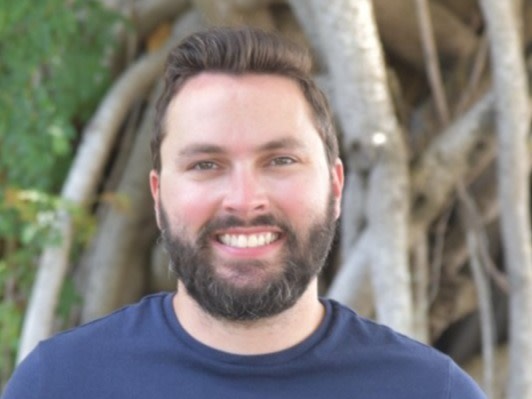
E: To start, can you give us a brief introduction of yourself and your company?
J: I’m Joe Malandruccolo, the Co-founder and CTO at Compa. Compa is a mission-driven company focused on making pay fair and competitive for everyone.
_E: I’d love to hear more about your journey leading up to Compa — it looks like you’ve had a few different experiences. _
J: Yeah, I started off as a chemistry major in college. I became an EMT, working on an ambulance. Then I transitioned into economics and joined Mercer in their human capital practice. Consulting seemed interesting to me, and specifically at Mercer, because the type of work I was doing involved human behavior and economics.
Towards the end of my time there, I remember one of the things I wanted to explore was how we could make what we were doing more repeatable. We always started with a brand new blank spreadsheet and that just seemed crazy. And there just wasn’t much of an appetite for that kind of thing. I left Mercer to obtain a Master’s in Computer Science at the University of Chicago, where I learned applied computer science skills. That enabled me to transition to engineering, and I joined my first startup after that through AngelList Talent actually. After that, I joined Facebook and was there for some time.
E: So you’ve really tried some different paths. What’s the commonality here for you?
I've always enjoyed being at the intersection of people and technical systems. I think it’s interesting to look at how other systems operate and apply them to what you’re doing. I also became a private pilot. Learning about airplane systems and how pilots interface with those systems. You can apply it to software and the software systems we’re building and operating. My team is probably sick of the some of the examples that I bring into it and always joke that they could land a plane based on everything I’ve told them.
I liked all kinds of random stuff. Definitely a nerd.
E: Ok, so we have EMT, pilot, compensation, and engineering — how did Compa come about?
J: Yes, I met my co-founder, Charlie Franklin, a long time ago. We met in college and worked at Mercer together. After that, I left and went into tech whereas Charlie went on to lead enterprise HR teams. Two summers ago, I get a text from Charlie saying, “Hey, would you consider leaving Facebook to start a company together?” and I just said “Of course.”
E: Sounds like it was an easy decision for you to do this with Charlie. Why was that?
We had talked about doing that. I remember all the conversations over the years we’ve had about doing it. And the timing was just perfect when you look at how far HR technology has come with data and what’s available now in the cloud. That, on top of this growing trend of pay transparency and really holding employers accountable, it just made sense. There is no way I would miss the opportunity to build a company with Charlie.
E: When Charlie texted you, was there a specific idea in mind or was it more to go and figure out something to build?
J: There was always a draw towards compensation specifically. It comes from just having seen how the sausage is made, and it’s worse than you can imagine. You have people making these kinds of secret and arbitrary decisions - I used to be one of those people! They say it's art and science, but whatever it is, it could use more data. And we knew we wanted to change that by empowering enterprise TA and TR teams with data.
It’s funny, the founding story here is that Charlie was considering going to London Business School. He was applying for a scholarship and had to write about a business idea for it, and he wrote about an idea in this space. As he talked to people in his network, they told him, “forget the scholarship, just go start the company.” And that’s exactly what he did. (By the way — he won the scholarship).
E: Wow. So it sounds like you both had some exposure and passion behind this problem. What was it about compensation that was driving you?
J: It’s a very personal thing. Pay transparency. Everyone who has had a job has dealt with this kind of thing — you may have negotiated a signing bonus or know somebody who has. You’ll see two people with the same jobs sitting next to each other, and one of them will make crazy amounts more. Maybe it’s because they’re a better negotiator, or they got a recruiter on a better day. Whatever the reason is, it’s not what you want. It’s not open, it’s not accountable. And it’s just so incredibly obvious to me that these decisions should be made with data. I was the person making these decisions before as a compensation consultant, and I saw how unfair and arbitrary it was. I saw that we had an opportunity with software to bring that kind of solution to market at scale, and put data in the hands of decision makers and actually do something on the margins of individual decisions to improve pay decisions.
For me, it’s that simple. It’s having seen what it was and how bad it is now. It's not that the people are bad people, they just don’t have access to the right data so they’re doing the best with what they have. So what we’re trying to do is give them better visibility by bringing them data.
E: Did you always know you wanted to start your own thing one day, or was this particular area something you just really wanted to solve for?
J: I generally wanted to start my own thing one day. But I wasn’t looking for an opportunity to just go do that. It was really the opportunity to work together with Charlie, number one. Number two was that it was for something in compensation, something where I bring more to the table than being a software engineer on a generic thing. This is something that I saw firsthand and was also shocked at 10 years ago with no changes since then. Then I was just ready for something like this, and it was incredibly compelling. It was the perfect moment to bring it all together.
E: I’d love to hear more about your co-founder, Charlie. Choosing a co-founder can be a big decision, and it sounds like he played a big role in your decision to start Compa.
J: Yeah, I can’t imagine starting this kind of company with another person. He’s just experienced living in this for a decade and has that whole perspective, versus someone who maybe is looking at it at a point in time. He’s lived it. And he’s just one of the smartest people I’ve ever met, so it really was a no-brainer. He just asked me, "Hey would you leave Facebook to start a company with me?" and the answer was just yes. It wouldn't have been a yes to anyone or any idea, but with Charlie and compensation, it was obvious.
E: Okay, so Charlie texts you a couple years ago, and together you start Compa. Since then, a lot of things have happened for you guys. What have been the biggest turning points?
J: Our first customer. We met this kind of visionary person who shared the same view, the same vision that Charlie had for what we could do with technology to help. And that transformed the company from just making things to serving customers.
Also, hiring our first people. It went from just being us hacking on stuff to getting outside perspective and feeling like a team. I was the solo engineer at Compa, and that's not when I'm at my best. I like working with teams and bringing in people to talk to, review ideas, collaborate with. So building a team transformed by experience.
E: Your first few hires at Compa were all engineers. How has it been leading engineering at Compa in particular?
I think the CTO job changes faster than the CEO job. Especially in the early days. You start as an individual contributor, a single engineer writing all the code. Then you hire people, and suddenly you’re a lead engineer. Then you need to keep growing, and suddenly you’re an engineering manager, and then you’re managing managers, working with engineers that are far more talented than you.
It changes from having no one reporting to you to leading an organization, setting a direction, and exploring new things. And it’s really a challenge to think about: what does the company need right now and how can I do that? How can I do the thing the company needs right now? In the moment, you don’t know if you’re right or wrong, like you might as an individual contributor engineer because your code runs, or it doesn’t.
Obviously, the CEO job changes considerably as you move on, especially from Series A to Series B and beyond as you build out other functions. But in this immediate, early period, it’s crazy how quickly things change.
E: When you think about the future of Compa, what’s the vision driving it?
There’s this huge information asymmetry out there, between the job seeker and the employer. The employer has a whole compensation team, they run compensation surveys, they have a compensation committee. You, as a candidate, you have none of that. Candidates get savvy with these reddit threads and spreadsheets that get passed around. But it creates this weird dynamic. So that’s what we’re trying to do — bring it back to a verified, trusted source of data where everyone can agree on the facts to make a decision, because pay transparency is not going way. Accountability is not going away. Our goal is to empower enterprise TA and TR teams in the era of pay transparency.
E: The last question I have for you is simple. You’ve been on this journey for a couple years now. What’s the biggest piece of advice you’d pass on to future founders?
I think a lot of comes down to having an attitude to go and figure things out. Being a first-time CTO, I spend a lot of time doing things I haven’t done before. You have this attitude of, “You know, I don’t know, but we can figure it out.” Having that kind of experience and comfort with ambiguity and uncertainty has been helpful for me, and it’s something that other founders I’ve talked to have highlighted as being important for them. It's a muscle, and you can get better at it. So for the people who are thinking about founding a company, I say yeah, go for it. Figure it out if you want to.