Wellfound's "Ask a Recruiter" series brings job hunters face-to-face with real tech recruiters who share honest advice on how to get hired.
Most job seekers are doing everything wrong. They're mass-applying on LinkedIn, sending generic resumes, and wondering why they're not hearing back. Sam Wright from Huntr brought hard data to Ask a Recruiter that explains exactly why this approach fails—and what actually works. His team at Huntr analyzed over one million job applications to uncover the strategies that consistently double interview rates, revealing insights that challenge conventional job search wisdom and offer a clear path forward for frustrated candidates.
🎥 Watch the full session on YouTube
TL;DR:
New data from 500,000+ job seekers reveals that tailored resumes drive 2.1x higher interview rates, LinkedIn's conversion rate is only 3%, and the sweet spot for applications is 10-20 focused jobs rather than spray-and-pray tactics.
The findings challenge widely accepted job search wisdom and confirm what many frustrated candidates suspected: the old playbook isn't working anymore.
The Job Market Reality Check
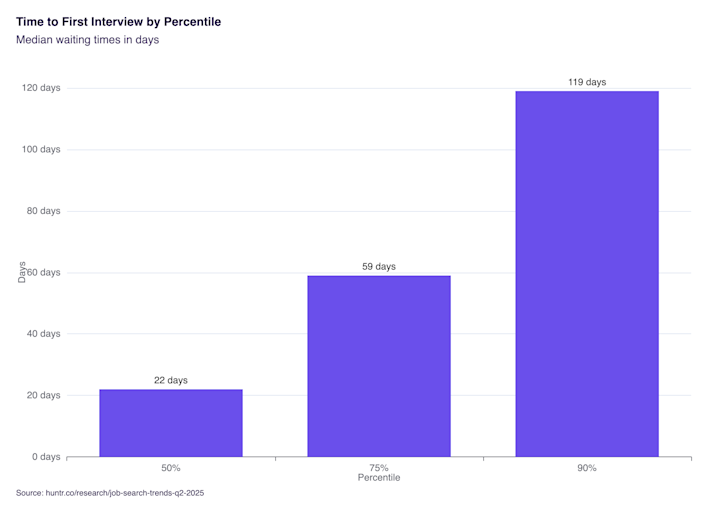
Wright opened with sobering context. "This is one of the most difficult job search environments we've seen in a while," he said. Half of job seekers get their first interview within 22 days. The unlucky ones wait 59 days or more. At the 90th percentile, candidates don't see interviews until 119 days.
It's the hardest time for new entrants since 1988, including college grads and career changers. The data showed this trend before Fed numbers confirmed the hiring slowdown.
The Resume Tailoring Breakthrough
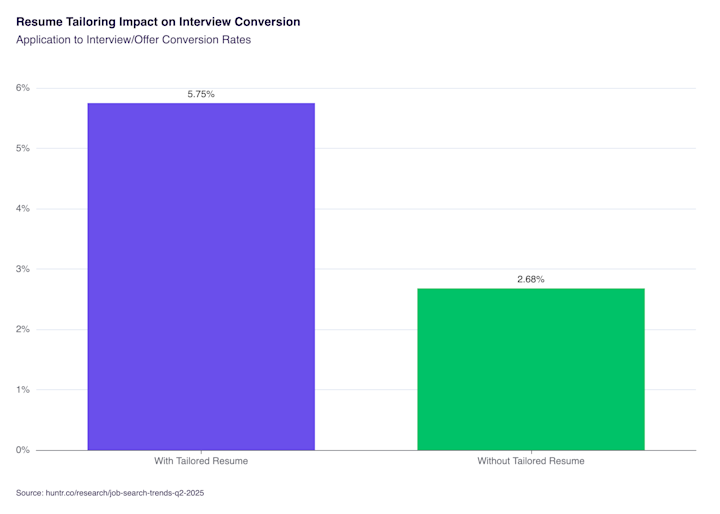
Wright's team analyzed over one million applications to uncover the most powerful factor in landing interviews. The results were stark: tailored resumes drove a 2.1x higher interview conversion rate.
This finding emerged from tracking candidates who customized their applications versus those using generic resumes across hundreds of thousands of job applications.
Wright explained:
"The summary section is tailored, maybe mentions the job you're applying for or the company specifically, and starts by saying here's the most impactful thing I've done in my career as it relates to this job,"
This isn't about gaming ATS systems or keyword stuffing. Modern applicant tracking systems parse designed resumes fine. "You want to be optimizing for the human that's actually reviewing and seeing the resume," Wright said.
The 2.1x multiplier represents the single strongest predictor of interview success in Wright's entire dataset.
Why Niche Job Boards Outperform Mass Market Platforms
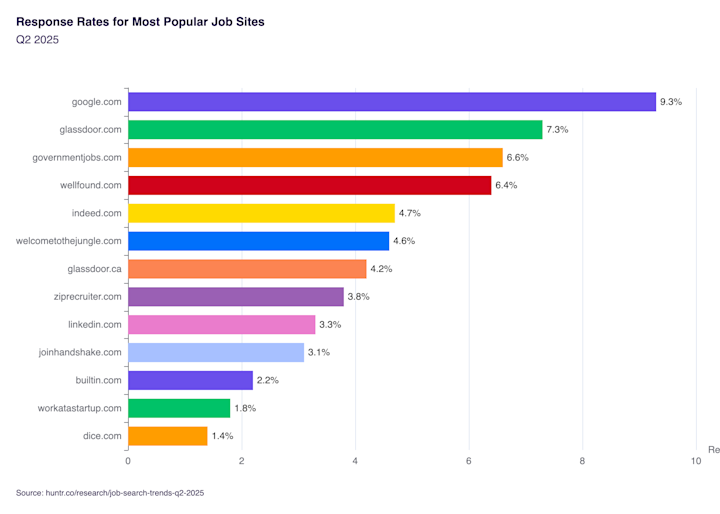
Wright's analysis revealed striking differences in job board performance. LinkedIn, despite its popularity, showed a 3% application-to-interview conversion rate, meaning candidates could expect to hear back from roughly one in every 33 applications.
"LinkedIn is a social network, and by that nature, it has a lot of candidates on it," Wright explained. The platform's broad reach creates intense competition, with Easy Apply features encouraging volume over quality applications.
Specialized platforms told a different story. WellFound showed double LinkedIn's conversion rate at 6%. Google's job search (which directs to company websites) performed even better.
"If you follow the crowds, you're gonna end up standing in line a lot," Wright said, quoting his grandfather. The insight isn't that LinkedIn is broken, but that niche platforms create better signal-to-noise ratios for both candidates and employers.
Wright's personal track record supported this diversified approach: "I've gotten 3 out of my 5 tech jobs on WellFound, and I've hired half our team at Hunter off of WellFound." Several attendees echoed this success, with one noting, “I've gotten almost every job through WellFound."
The strategy isn't abandoning large platforms entirely, but understanding their limitations and complementing them with specialized boards that match your industry and experience level.
How Concise Application Framing Drives Higher Response Rates
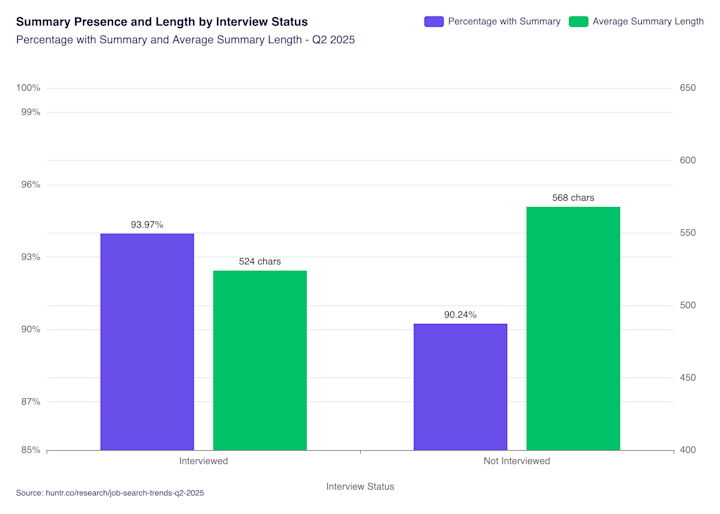
Wright highlighted a specific feature that demonstrates how framing your interest can make applications stand out. Many platforms ask generic questions, but some are designed to help candidates showcase fit more effectively.
"What interests you about working for this company?" in WellFound's application process serves as more than a standard prompt. "This is a really great spot to highlight yourself. It's like a mini cover letter," Wright said. "When I've reviewed applications that came in on WellFound, the answer to this question did help people stand out."
The design philosophy behind such features matters. The WellFound team explained: "The character limit is so that people are concise with it." The goal is demonstrating fit without lengthy cover letters that might not get read.
This constraint reflects current recruiting reality. With recruiters overtaxed by application volume, making it easy for hiring teams to quickly understand your fit increases your chances of moving forward.
This approach extends beyond individual questions. Platforms that verify job postings create better environments for meaningful applications. "We verify everyone that posts a job," the WellFound team noted. "If something seems off, write to us. You'll get a human reaction."
The lesson applies broadly: look for opportunities to frame your interest specifically and concisely, whether through platform-specific features or in how you structure cover letters and application materials on other sites. When recruiters are drowning in applications, clarity and brevity become competitive advantages.
Quality Beats Quantity
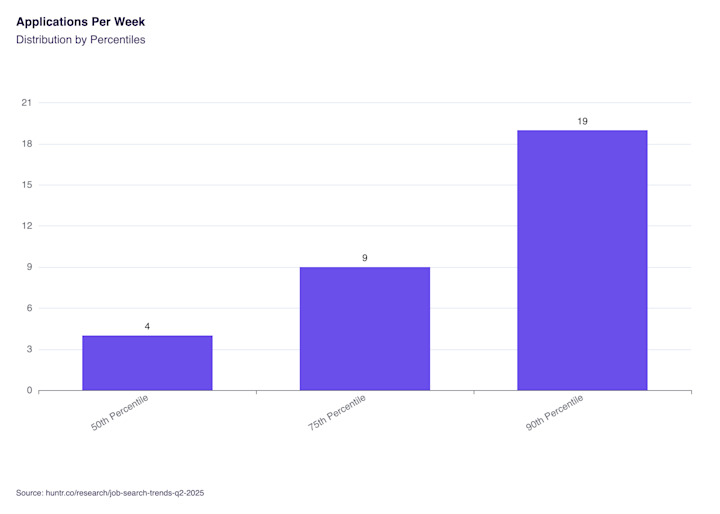
Wright's data demolishes the spray-and-pray approach. Candidates who apply to 10-20 jobs per week see better outcomes than those submitting 100+ applications.
"We're seeing that a more tailored and specific strategy has a higher application-to-interview rate, and ultimately application-to-offer rate," Wright explained.
Even nine applications per week puts you in the 75th percentile by activity level. The psychology makes sense: when facing rejection, the natural response is working harder and applying more. But unfocused applications just create noise.
Skills That Command Premiums
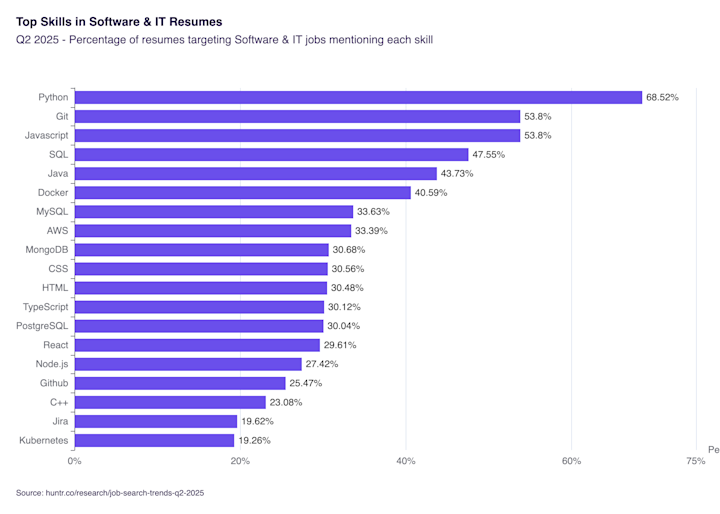
Wright's analysis of 250,000 job postings revealed which skills command salary premiums. Engineering leadership, tech strategy, and AI strategy topped the list.
One unexpected finding: "product intuition" showed a huge salary premium spike in Q1. "You hear about AI being about taste," Wright said. "You're prompting things, but what are you prompting, and what's the polish you're putting on afterwards?"
Companies want people who can direct and refine AI outputs—a distinctly human capability.
Ghost Jobs Are Real
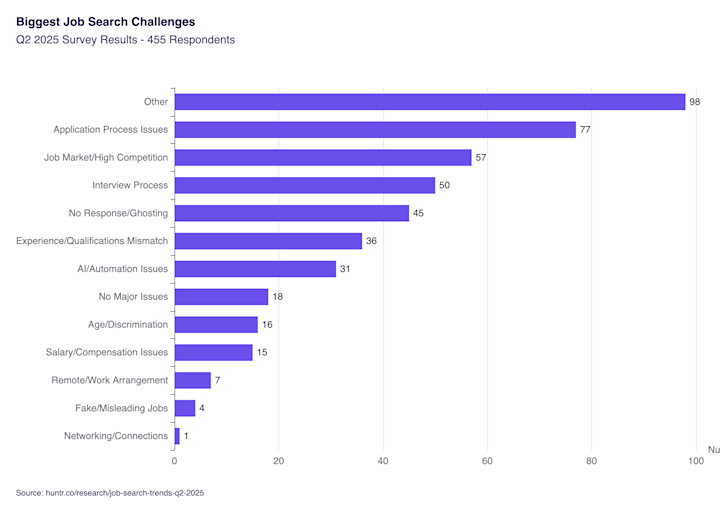
Wright confirmed what candidates suspected about fake postings. His team found 41% of job seekers had applied to scams by mistake. Beyond outright fraud, companies leave openings posted purely for marketing purposes.
"When you post a job, you get a bunch of people liking your page or following your accounts," Wright explained. Some exploit this for brand visibility without serious hiring intent.
AI Resume Tools: Proceed With Caution
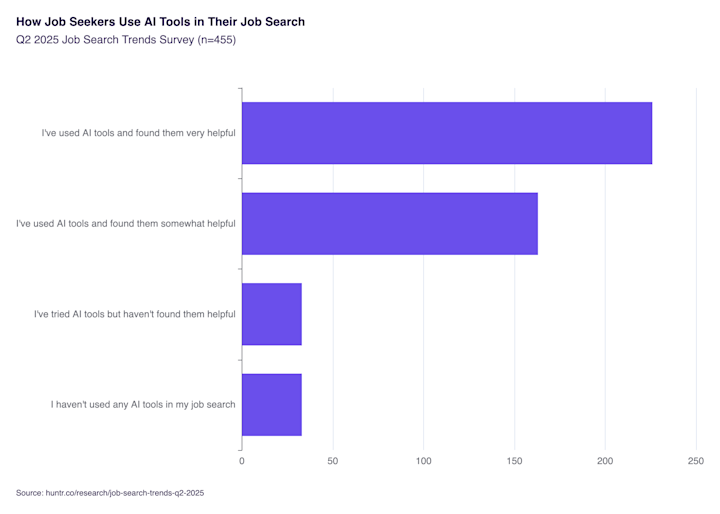
Wright was candid about AI limitations for resume writing, drawing from his team's experience building their own AI-powered resume tools.
"My biggest pet peeve is results-driven," he said. "If a resume starts with results-driven, instantly my red flag goes up that it's AI."
The problem goes beyond just one phrase. Wright explained that when using tools like ChatGPT or Claude for resume writing, "you're gonna get a lot of resumes that sound just very much the same." His team at Huntr spent considerable engineering effort training their model to avoid generic language patterns that immediately signal AI assistance.
"It took us a long time to train the model to get away from it starting with literally results-driven every time," Wright noted, highlighting how persistent these patterns can be even in purpose-built tools.
For those using free AI tools, Wright recommended a targeted approach: "Go piece by piece, and really try to go sentence by sentence or section by section." This prevents the generic, templated feel that comes from asking AI to rewrite entire resumes.
Wright also emphasized that effective AI use should enhance your unique accomplishments, not mask them. "Use AI to help your individual stats and facts stand out," he suggested. Rather than generating generic descriptions, AI should help articulate specific metrics and achievements that differentiate you from other candidates.
The key distinction: "There's no such thing as an AI resume and a non-AI resume. It's just a good resume or a bad resume."
Actionable Takeaways
1. Tailor every single application
The 2.1x advantage for customized resumes is the strongest predictor of interview success across 500,000+ job seekers.
2. Abandon LinkedIn for active job searching
With only a 3% response rate, LinkedIn wastes time you could spend on higher-converting platforms.
3. Focus on 10-20 quality applications weekly
Targeted applications outperform volume approaches.
4. Use WellFound's features
Leverage the company interest question as a mini cover letter and consider intro videos.
5. Lead with impact in your summary
Start with your most relevant accomplishment for each specific role, not generic buzzwords.
Sources: Huntr Job Search Trends Report Q2 2025 and Wellfound's "Ask a Recruiter" session with Sam Wright.
To learn more candidate tips, subscribe and check out 'Ask a Recruiter' on YouTube here.