Wellfound's "Ask a Recruiter" series brings job hunters face-to-face with real tech recruiters who share honest advice on how to get hired.
When Nathan Donato, Product Manager at Wellfound, started diving into platform data to understand what actually drives job search success, he discovered that small, strategic changes could dramatically improve a candidate's odds.
"Yes, doing these quality things helps. 20% lift here, 15% lift here," Donato told candidates during a recent Ask a Recruiter session. "The data shows it is effective. And what makes the biggest difference more than anything is persistence and perseverance."
But the real story wasn't just about applying to more jobs — it was about understanding exactly which levers to pull for the biggest improvements.
🎥 Watch the full session on YouTube
TL;DR:
Wellfound's Product Manager analyzed thousands of job applications to reveal what actually drives hiring success. While persistence matters, strategic improvements to your profile, applications, and timing can create 20-40% lifts in your chances. The data shows exactly where to focus your energy for maximum impact.
The Current Market Reality
The median job posting on Wellfound receives 41 applications — and that's just one platform. The acceptance rate for getting matched to interviews sits around 5-6%, which reflects today's competitive market.
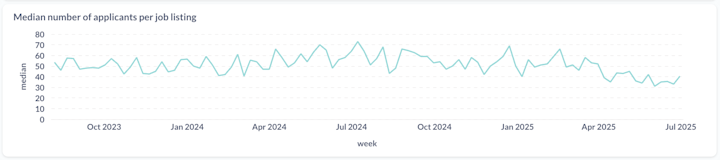
"This is a pretty strong employer's market," Donato explained. "But when you look at these match rates and see these numbers, they're very low, I'm going to show you differences between numbers. And you'll see a match rate that's 5%. And then you'll see one that's 6%. And you'll say, what's the difference? Well, the difference there is actually 20%. That's a 20% lift."
Those percentage point improvements matter enormously when you're trying to stand out among dozens of candidates.
Where Quality Creates Real Impact
The data revealed several areas where focused improvements create meaningful lifts:
Apply Early, But Don't Abandon "Older" Jobs
Applications submitted on day one had an 8.56% match rate, dropping to 7.65% within the first three days. But month-old postings still maintained a 4.64% match rate.
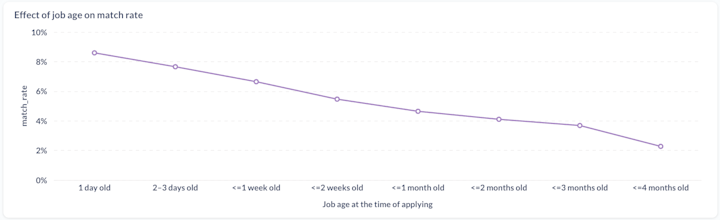
"There is an assumption that if you see a job that's two weeks old, three weeks old, a month old, it's not even worth my time," Donato noted. "It's true that it's lower, but it doesn't mean it's not worth it."
The insight: Hiring happens in waves. Missing the first wave doesn't disqualify you from the second.
Profile Completion Drives Progressive Improvements
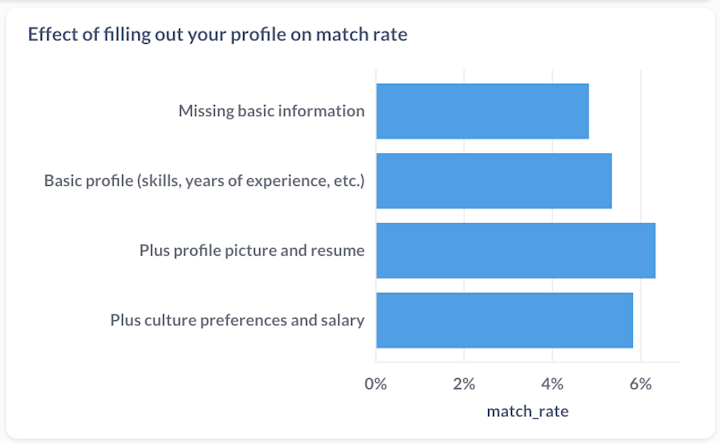
The data showed clear progression as candidates filled out more information:
- Missing basic info (skills, experience): 4.83% match rate
- Complete skills and experience: 5.53% match rate
- Added profile picture and resume: 6.55% match rate
But here's the key finding:
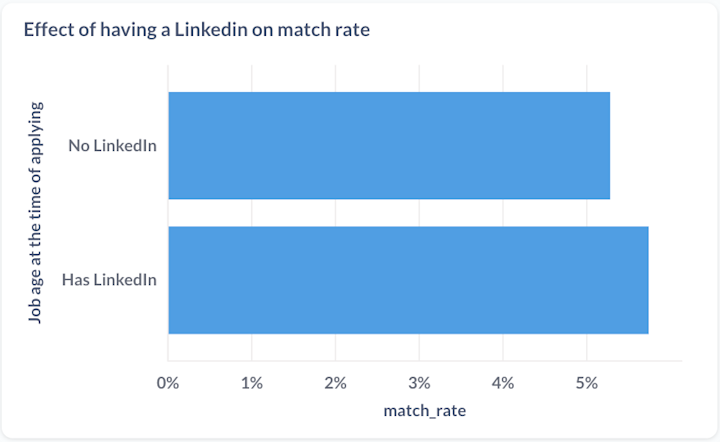
Adding LinkedIn profiles and detailed work history created measurable lifts because they provide social proof and help recruiters verify your background.
Personalized Applications Create 21% Better Results
Generic applications and no cover letters performed identically. But candidates who mentioned the company's product, mission, or conveyed genuine excitement saw match rates jump from 5.39% to 6.55%.
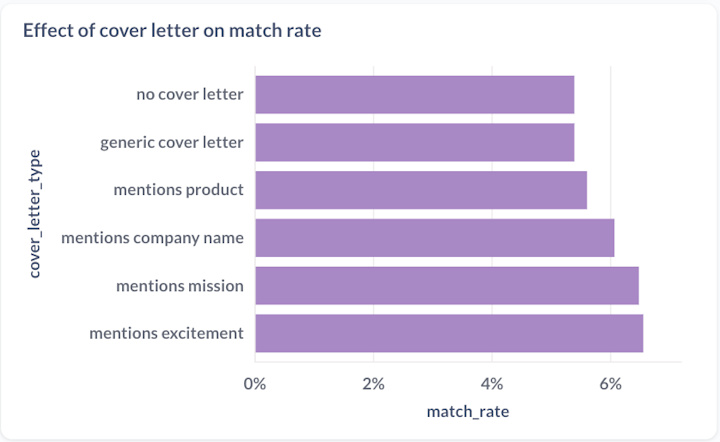
"If you mentioned their product, if you mentioned the company's name, if you mentioned the mission, if you convey excitement, suddenly it starts to go up," Donato explained.
The Iteration Advantage
Perhaps the most actionable finding: candidates who updated their profiles between applications significantly outperformed those who kept applying with identical materials.
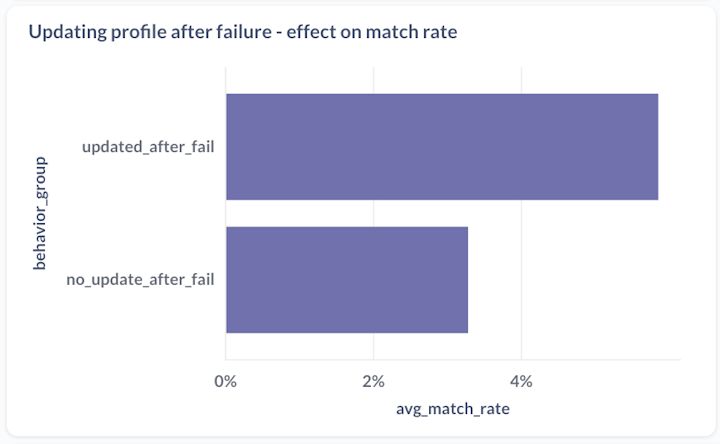
"I talked to this candidate who takes a data-driven approach to job search where he will just try different things, A-B tests, so to speak," Donato shared. "25 applications here, 25 applications here, see what works, maybe try a different format or something."
Remote Work Shows Strong Performance
Contrary to doom-and-gloom remote work predictions, remote roles actually showed higher match rates than on-site positions on Wellfound during the analyzed period.
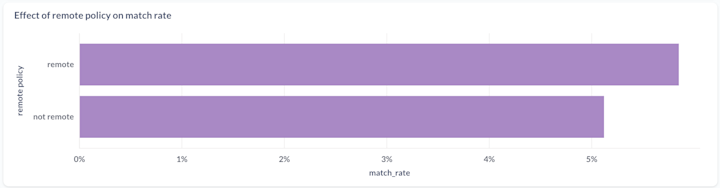
"I hear a lot about remote versus on-site. 'On-site roles have a better match rate. It's not worth applying to remote roles.' That doesn't seem to be true on Wellfound in the last six months," Donato reported.
The Power of Persistence
While quality improvements matter, the data revealed a striking pattern about application volume and success rates:
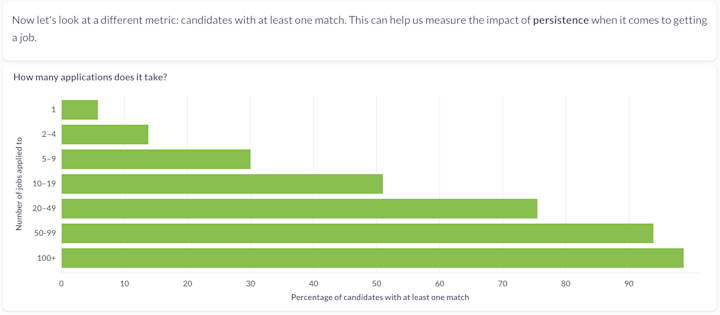
The volume insight isn't "spray and pray." It's about creating enough data points to understand what works for your specific background and target roles.
"Create your own data points because no one is the same as you other than you," Donato advised. "Try different things, see what makes a difference."
The AI Reality: Better Than You Think
One major concern from job seekers was AI auto-rejecting applications. Donato's research revealed a more nuanced reality:
Companies use AI for sorting, not auto-rejection. Unlike rigid keyword matching, AI can infer relevant skills and experience, potentially helping candidates who might have been filtered out before.
"A recruiter might say they want any modern front-end framework. They could list those out as keywords. Maybe they spell React JS with a dot between React and JS. If you don't have it with a dot, suddenly you don't have the keyword. But an AI could say, 'You have Vue, so you meet that criteria,'" Donato explained.
For candidates using AI: Use it as a "copilot, not an autopilot." AI-generated applications are increasingly detectable. Use AI to speed up research and initial drafts, but ensure final applications sound authentically like you.
Breaking Down Employer-Candidate Assumptions
Employers often assume candidates with recognizable company names are automatically higher quality. If you don't have brand-name experience, explicitly contextualize your background and the scale/scope of your work.
Candidates often assume recruiters don't read applications carefully. They do, but they scan quickly. Front-loading your most relevant experience and impressive metrics at the top maximizes your brief window of attention.
Both sides underestimate the impact of timing and hiring waves. Companies often return to their candidate pool multiple times as their needs evolve.
The Networking Factor
Multiple recruiters confirm that referrals almost guarantee screening calls. With many startups offering $1,000+ referral bonuses, employees have real incentive to help strong candidates.
Key strategy: Target hiring managers, not just recruiters. Research their work, reference specific company initiatives, and demonstrate you've invested time understanding their challenges.
Actionable Takeaways
- Optimize your "first 10 seconds" content: Perfect your Wellfound 'Looking for' and 'Achievement' sections and your social headlines, profile summary, and opening resume lines. These get the most attention during initial scans.
- Create application experiments: Test different profile summaries, cover letter approaches, or keyword emphasis across batches of similar roles. Track what generates more responses.
- Leverage AI strategically: Use it for research, role discovery, and initial drafts, but ensure your final applications reflect your authentic voice and genuine interest.
- Don't abandon "older" job postings: Companies often do multiple hiring rounds. A 2-3 week old posting might be entering its second wave of candidate review.
- Build genuine connections: Invest time in 10-15 companies you really want to work for. Research their challenges, engage with their content, and reach out thoughtfully to hiring managers.
The real insight from the data: Small improvements compound. A candidate who optimizes their profile, personalizes applications, applies strategically, and maintains persistence can see dramatic improvements in their success rate.
"The data shows that being a little more, taking a little more time, having a quality application does help," Donato concluded. "But the most important thing to do is iterate, try different things, see what makes a difference."
To learn more candidate tips, subscribe and check out 'Ask a Recruiter' on YouTube here.