"It became really clear to me that we needed to do something now. That it’s fundamentally going to impact the quality of life — that I’m going to have when I’m older, but also that of my kids. It’s the thing that drives us as a company."
In this From the Founders interview, we hear from Mark Wong of Kopperfield. Hear about Mark's journey from growing up with two parents as entrepreneurs, to one particular day in California that motivated him to start Kopperfield.
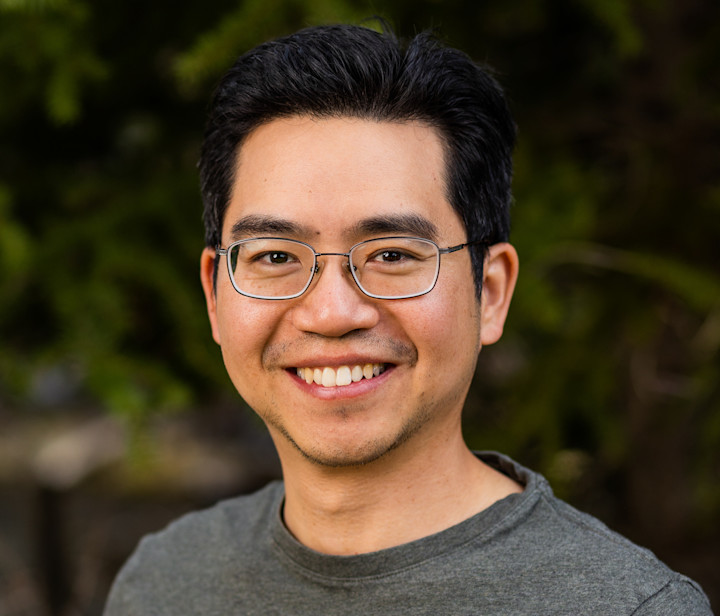
E: To start off, can you give us a brief introduction of yourself and your company?
M: I’m Mark Wong. I co-founded Kopperfield with my friend, Jesse Vaughan. The summary of Kopperfield is that our mission is to accelerate home electrification. We’re doing that by building a commerce platform that makes buying major home electrical appliances like EV chargers, and eventually heat pumps, induction stoves, solar panels, home batteries et cetera much easier. Right now, these upgrades are like home remodels that people have to manage. We want to turn them into something as simple as an online purchase. You can click and buy and take care of installation all at once.
We started the company in late 2021, and we’re up to six people now.
E: Can you tell me more about your personal background, leading up to Kopperfield?
M: I grew up in Calgary, Alberta originally. My parents were entrepreneurs, so they did all kinds of things, but the most consistent thing they did throughout my childhood was property management. So from an early age, I was always interested in properties.
I’m a very small real estate investor now, but I took a different path for my career focus. I studied computer engineering and I’ve spent a good amount of time building commerce and machine learning software at a series of companies that have been going from larger to smaller and through good fortune, increasingly faster growing. I was at Microsoft right out of school at 100,000 plus people, then I joined Facebook to help build out ads. It was approximately 3,000 people when I joined and more than 10,000 when I left. I then joined Stripe at approximately 300 people to help build out the product management practice, and a few thousand thousand people when I left.
E: What was the draw towards computer engineering in the first place?
It started when I was a kid watching my brother play video games. I couldn’t figure out how to play them myself - I was too young - but I would hang out in his room and watch him play play computer games like Star Control II and Wing Commander. I found them really interesting and got hooked on computers. I learned how to write visual basic and create access databases. I got an internship building little database applications for people, and I really loved it. After graduating from school, I got a chance to work at Microsoft and I jumped at the opportunity. While there I was able to see first hand how software has amazing potential to help people do the things they want to do, at a global scale.
E: You went from a company as big as Microsoft and slowly moved towards smaller and smaller companies before eventually starting your own thing. Did you always know you wanted to do that?
M: It wasn’t obvious at the beginning of my career if I’m being honest. Like I said, my parents were entrepreneurs, and they had a really interesting journey. It had a lot of very variability that was sometimes very exciting — the highs were high when things were working. But the lows were also low when it wasn’t. So when I started my career, I actually was excited to have something a bit more predictable.
But, because of my career shape and trajectory, I was able to see it all in a kind of stepwise fashion. As I joined progressively smaller companies, I realized the types of challenges, the speed, the velocity, the intellectual engagement were becoming more and more attractive to me as I progressed in my career. A lot of folks do it in a different order, but I really liked that I was able to go from a big place and see the scale, and then try to bring parts of how they operated into a smaller company, learn what worked and what didn’t, then repeat at at even smaller scale.
_E: It’s funny, in another interview recently, a founder was telling me that he thinks that for many founders, if they knew then what they know now, they might not have done it. That having some sort of blissful ignorance was a blessing in disguise. For you, though, you did somewhat know, thought you’d maybe pursue something more stable, and now you’re doing it. _
M: Yeah, I think my experience as a kid helped me see the good and pad parts of being a founder, and have influenced why it’s taken me so long to be ready to be a founder myself. When you join a larger company you gain a ton of support, mentorship, infrastructure, clarity, and focus. But you’re give up some of your ability to pick and chose the problems you focus on, and the team you’re working with. This is where a small company shines. My career journey has given me a chance to develop my conviction in myself and conviction about which problems to focus on. I feel really fortunate because I get to work on something that I personally really care about, with people I love working with and it feels awesome.
E: It sounds like this whole journey is coming from this intersection of many parts of your background. Where does the interest in electrification come into play?
M: After Stripe, I wasn’t sure exactly what I wanted to do. I spent a long time walking the idea maze exploring, ideating, and testing different hypothesis. I was initially pretty focused on fintech, but during the process I noticed my interests gravitating to climate and due to some personal experiences it became clear to me that climate is where I needed to focus.
Specifically, in 2020 when I was ideating, the California wildfire season was really intense. There was that day in the bay area when the sky was dark orange. After trying and failing to explain to my kids why this was happening, I spent a bunch of time reading and trying to understand the data, reading as much as I could about climate change and the levers to fight it. My interest in residential electrification started from my personal experience electrifying a small rental property and upgrading my own home. As I learned that it is also hugely impactful from a climate perspective we dove in with both feet.
Climate action is crucial, and it needs to happen now. It’s the thing that drives us as a company.
I think that everybody has skills that can make an impact, even if they’re not traditional climate skills. Initially I was discouraged - I’m not a chemist or a physicist to invent a new solar panel or a new renewable energy reactor or anything like that. But I think there’s this role in the climate transition for everybody because the magnitude of change that we need to make as a species is humongous.
E: When you talk about that period where you were ideating and brainstorming on the side, it sounds like you were in a state of curiosity where you were constantly questioning and exploring different things. Did you always have that type of mentality?
M: Yeah, I think the process of exploring that white space was surprisingly challenging and emotional. It’s kind of described by folks as I was getting into it as part of the founder’s journey. The thing that I really learned during that time was that the distance between ideas that seemed viable and ideas that I really wanted to work on and create a company around was much larger than I had ever imagined. It wasn’t until I was staring at that white piece of paper, thinking about what I was going to go do and commit many years of my life to.
When I was working in corporate situations, there’s enough structure that you kind of know what the company is focused on and you can look at the ideas. I think my career has always been about finding opportunities to build new products, and that part has been consistent. But the white space was just really interesting and challenging to navigate. So we spent a lot of time trying to think and explore, and the switch was more about trying to figure out and pin things down. It was kind of emotionally taxing, which it doesn’t sound like it should be, but it takes a long time and felt frustrating - the voice in my head was saying that “I shouldn’t still be searching, I should be building by now.”. But ultimately the process is important and educational, just something that I didn’t expect as part of the journey.
E: What has been your biggest takeaway as a founder?
M: On a personal side, I’m going to try my best to share this journey with my kids in a way they can hopefully see and be inspired by some of the agency that I felt inspired by when I was a kid. And then of course, as much as possible, try to insulate them from the uglier parts of it as things are going up and down.
As for other founders, I think this quote from a podcast embodies it: it was about how founding a company is really about choosing who you work with and what you work on. and if you feel like those two things are very important to you, then it’s a great way to go. But if either of those things are flexible, then maybe it makes more sense to join something. Because there’s the time and energy of being a founder — you spend your focus across a number of different things. And so I think if you look at overall impact, it can be a situation where joining could actually give you a better chance to have impact or learn faster. But if you’re a very convicted about who you want to work with and what you want to work on — then it’s the only way.